miércoles, 5 de mayo de 2021

IT Kantianism: Can our ethics keep up with new Technologies?

How many times have you seen someone on Twitter telling the people to stand against some other trending topic user? We can see this kind of thing almost every day, there are news that say something about for example, The new Superleague some football clubs are trying to implement. And then a lot of people, famous or not saying that that idea is not good. Do you think this other famous people that says that The Superleague is going to be the end of football think firstly how they influence the fandom behind them? 
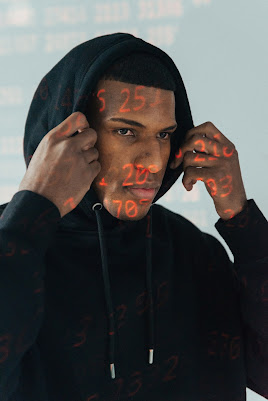
Actually it is so easy to manipulate the users to be part of something as a means in order to get an end. If I get a lot of people supporting my idea this idea will become stronger just using their opinion.

But are there any good examples in technology of people treating people as if they were the ultimate end?For example, long distance relationships are focused on the other person in an online way just because of the person itself. You want he or she just because it is he or she, not because  it going to return your love or is it going to bring you happiness, WhatsApp is good example on but of course it depends on the way you use it. At the end it will be up to you to use the technology in an ethical way so you can focus on people. People need to know that behind their screens they can make a lot of damage but also you can make a lot of good things and treat other persons as what they are persons, not just words in a forum or on a YouTube comments section, on Instagram likes you shouldn't post your photos if what you really want is feel good because you have a lot of likes on your post.


In my opinion we must never forget that we are people relating with people.  

 "Behave in such a way that you treat humanity in a particular way. Never treat people as if they were a means to an end, on the contrary, always treat people at the same time as if they were the ultimate end." Immanuel Kant. 

miércoles, 28 de abril de 2021

Real-Life Assistive IT


As you can see from this video (Video) on YouTube this boy had some motor body problems because of a motorbike accident and now he can use the computer with his tongue and use every functionality over it. This is actually amazing how humans can develop themselves in order to obtain control over things even though they just can control their brain (in a biomotor way).

There are also some other good examples of this assistive IT, the most famous is Stephen Hawking, ACAT is the program he used in order to select characters and words which also means: assistive context-aware toolkit. It consists on an infrared switch that was attached to Hawking's glasses and would detect movement he made with his cheek that would stop the cursor or mouse from moving on the screen. How good can be the IT development to make someone that apparently cannot speak become a really famous and useful scientific disseminator.

I think there is still not enough investment in this kind of biotechnical engineering because some people still cannot use all this services. Of course each person has different needs and different specifications but we cannot forget about them because as Hawking had also this complicated disease he helped a lot in a scientific way to the society.

Also I wanted just to have in consideration the cyborgs, it is interesting how much the technology has been introduced in our lives and this man called Neil Harbisson has caught my attention so much because of the anthem he has on his head in order to "listen to the colours" check it here! Video 2.

jueves, 22 de abril de 2021

2 Interesting Linux distributions: Endless OS & Parrot OS

 Endless OS is a Linux based operating system and has a hardware platform linked to it. It was developed in order to solve the problem of limited Internet in some remote places so you could use almost every service without needing connection to the Web. It started being a crowdfunding project that reached $176,538 in one month and after a few months later some computers appeared with this OS inside. It was a good idea and also cheap because you wouldn't need Internet so you will save money. The problem was that between this type of OS and the ones being able to connect to the web were many features that led the first ones to almost disappear. Anyway you still can find them and I think it is a good solution when you go somewhere you don't have access to any network. 


Parrot OS is an ethical hacking distro based on Debian, focused mainly on everything related to computer security. This distro has been designed from the ground up to stand up to other alternatives, such as Kali Linux or BlackArch, focusing on offering its users a complete ecosystem of penetration testing, vulnerability assessment and analysis, as well as forensic analysis of systems, preservation of the anonymity and practice with cryptography and encryption. Basically is the one of the best OS to develop yourself in the field of cryptography and cybersecurity systems due to the amount of services it has and also is a really good way to develop your hacking skills in an ethical way. 


Between this two OS there are a lot of differences such as their origin which was focused one on people having problems to access the Web and the other group wanted to test protocols on the network, and as it is obvious the target of the public are also way different. Endless OS for normal people without any IT formation and Endless OS for people who wants to develop their skills and analyze in more detail the breaking the network skills.   

sábado, 17 de abril de 2021

HACKERS are you one of them?

 Which are the goals of a hacker? How is their life? Is it legal to be a hacker? Is hacking good for our web society? When someone becomes a hacker?

Too many questions and many few answers. Actually I have met some hackers in my life and I need to say that they were really good looking people with good goals in life such as earning money, building a family, acquiring skills, etc. One of them told me that he hacked some security systems from the mediterranean sea such as radars and other control devices just to see if he was capable, but then I asked him: Did you consider yourself as a hacker when you did that stuff? He answered no. So then this makes me think about the ideals of a 'hacker' nowadays.

 At the base he/she is a person who can have good goals or bad goals but actually both are the same. Let me explain because this is so relative. A person can be hacking some systems with good goals as the one I met or not. For the second one which are his/her ideals in life? Earning money? I think it is not a bad idea, just the consequences of it, if you make suffer people then you can be considered as a dangerous person with bad goals in life. In fact this is the most basic difference. It is known that some companies hire hackers to protect themselves from other hackers so we can say the hackers hired can be called anti-hackers and this will be the good way of calling a hacker a real worker with
good ideals.

domingo, 11 de abril de 2021

Online Privacy & Censorship

    As we all know online users are growing fast so the traffic has increased at least 300% in 10 years from 2021. As this is true governments has now focused on establishing new politics in order to cover the privacy of the users and also their rights online. But, there are always some exceptions:  

Webcamgate: Spying Laptops 

A Pennsylvania high school gave its students an Apple laptop so they could use it at home to study and do homework. Cool! But the gift came with a big surprise, and that is the laptop had software that transmitted the images captured by the webcam to a specified address. So high school got over 56,000 photos and screenshots of teenagers in all the situations you can imagine in front of the camera. Invasion of privacy, among other accusations within the case, made the school have to pay more than $ 600,000. Cheap is expensive, especially to your shame.

Hotmail: Changing password is good right?

The number of people affected is what often accounts for the magnitude of a scandal, and the one that Hotmail starred in in October 2009 is an example. 10,000 users woke up to an email from the Hotmail team telling them to change their passwords in the next few days because they had had a security breach and their data was compromised. It turns out that these had been caught (supposedly by phishing), and then shared in a list via the Pastebin.com site. There were no big demands, but that month Gmail had more new users than expected.


    About "censorship" seems to us a thing of the past, or at best, of cou
ntries with totalitarian regimes where their citizens cannot express themselves freely for fear of reprisals. But although it may seem strange and distant to us, the truth is that in something as close and everyday for us as the Internet there is also censorship ... and a lot.

It depends on which countries you connect to, what kind of technology you use (without going any further, a simple VPN) or what activities you carry out, you may find yourself not only with content that has been censored, but also receive the unpleasant surprise that you have to pay an exorbitant fine for the simple fact of having tried to access content blocked in your territory.

I think the most important thing about censorship is controlling the information, we know there exist a lot of fake news which obviously is not good for our economies and our government integrity. But having a lot censorship is good for a country, seems good but let's see which is the country that censors more:

The number one country practicing censorship today is North Korea, not too surprising given the country's closed nature. It is estimated that even only about 4% of the entire population has access to the Internet, with everything controlled by the government. The number of cell phone users is slightly higher, around 7%, but Internet access is still limited. Even only a few of the most powerful and wealthy in government have access to what the free world knows as the web, most citizens can only access a tightly controlled intranet. 


miércoles, 7 de abril de 2021

Spain's security state

Have you ever considered your country secure against hacking attacks? How secure is it for real? Honestly as an IT student focused on cybersecurity methods I need to say that my eyes opened widely when I knew how much vulnerable we are. In my country Spain, there has been a lot of accounts hacked and it is common to see some titles in the news such as: 2 million Twitter accounts hacked, Facebook losses control over your information, Real Madrid Twitter account hacked,... 

So in my opinion what should we do for preventing this? And from where can we learn? There are some countries as Estonia used to these kind of cyber attacks because practically everything is online and how they deal with this? Well of course starting from the base, training professionals in the sector in a very conscious way providing them with a large amount of resources at their disposal and investing in it. This is how you get a stronger country in terms of cybersecurity. Of course, there will always be some attacks that pass the security barriers, Kevin Mitnick himself commented in his day: "Anyone can make attacks like those of Anonymus".

What do you think? Should we invest more on cybersecurity profesionals too?


jueves, 1 de abril de 2021

Bad designs vs Good designs

 How many times have you lost time will figuring out how to solve some problem and then you realised it was much easier and simpler as you though? Well, today I will bring some examples of well designed IT programmes and bad designs, let's take a look into it.

Microsoft Word, oh... this program, how much time I lost using this! Word offers you a lot of tools and actually they are quite useful, but sometimes there are way to much stuff that you don't remember where was the header and footer configuration. It took 5 minutes looking for it and well I needed to use google Chrome in order to figure out where was it!! And well also with pasting pics... The text moves when you put the picture then when you manage to put it properly so everything fits then the text above isn't well organised... Well it's a really good tool but it requires time, the same with Excel for example.


But let's say there are some tools which are really useful and simple such as the tool called Snipping Tool, (you can find it in Windows tapping it on the searcher) this one has been the most useful tool and the most used one for me to make partial screenshots to stuff like important for my studies, information from classes, sending one concrete picture to someone in a matter of seconds...


martes, 23 de marzo de 2021

IT professional, The evolution of work

"Any sufficiently advanced technology is equivalent to magic." Arthur C. Clarke.

    Technology is what we mean for new things that seemed like magical about 20 years ago and so the technology people had around those years where stuff like a Game Boy (Released by Nintendo in 1989), DVD in order to replace the old vhs and add more fiability and efficiency, Windows 95,98 (Released by Microsoft) which established the base of the next softwares incoming, the World Wide Web or Internet as we all know it, this all are examples of which type of technologies we had and it is so interesting to think on how much things has changed.  Our way of relating between us has changed a lot, by now the social medias as Facebook, Twitter, Instagram, apps that has changed a lot our way of facing life and relationships/behaviour. 

    But I would like to focus a little on how the profile of an IT professional has developed in my country(Spain) and what it implies today. As I have previously told in the paragraph above there has been a lot of new technologies that has affected our way of finding jobs our teaching and learning technics, so what about the IT professional, has there been also any difference in their preparation/learning? 

As the development in industry were starting to grow sharply, there was a need to start developing new learning skills for the professional and this happened in the universities. They focused to teach engineers the basics of this new techs, such as basic programming such as Java. It was needed for the new apps that will appear later and so they needed also help from companies. Let's say that the universities gave the base and the companies gave the rest. It was a race of who had the best professionals that could help the company to release any product that could revolute the industry and society, so for that the training that needed to have a professional was really big but also limited. There wasn't a lot of information as now due to the Internet, but as it started growing up the information sharing also grew up helping to develop more and more IT professionals. 

Nowadays, as an IT student willing to become an IT professional I can say that they are teaching me the most basics as 20 years ago but also the creativity incorporated. And for me I see it as almost the same process but of course not with the obsolete technologies, with the new ones. Even with the pandemic the education as changed and I can say that I feel more of a worker prepared to face whatever happens next. I feel motivated and willing to find a job where I can even develop more myself in the technical skills. 

One last thing I spotted out, is that now it is more easy for new IT professionals to create their own business so this helps a lot to find new technologies due to the creativity young workers are having thanks to their learning during their studies. It is easier to become a startup and focus on research of new ways of relating between us such as Tinder or even WhatsApp

Let's see what happens in the next 20 years! 


miércoles, 17 de marzo de 2021

Do you behave the same way online as you do in real life?

 Hello! Today I would like to discuss about how we behave online. I found it interesting in the way Virginia Shea describes it in her "The core rules of Netiquette". It is one of the ten rules you should follow in order to be a "healthy" online user. 

The behaviour online has took my attention due to its complexity. You can be whoever you want and behave however you want on the web but is that good? I mean not being as you are in real life is good for our human relationships? Well actually in my experience I found out that our way of relating with friends/people online varies a lot from what we really are. Instagram for example, most of the people there doesn't behave as real life, and why? Well there are many reasons: money, followers, visibility, social status, trendies... 

I think this cannot be good for us, I mean yes in the way of connectivity with other people but bad for our personality. Even in young people we find out that is more normal to find kids focusing on being like a footballer or as an Instagramer selling clothes or dancing instead of focusing on themselves. I don't want to be pessimistic about this because I am sure that there are other people who really use the social media properly but we are having personality losses in our society and this isn't good. 

Now, do you feel like being yourself while you post something on Instagram/Facebook/whichever social media? Do you feel free online or there is  something that prevents you from being yourself? 

No matter what and no matter who, defend your personality online!! It will be good for you and for everyone, be yourself!! :) 


miércoles, 10 de marzo de 2021

COPYLEFT what is that?

Today I am going to focus on the term Copyleft andwhy is it important to consider this in your works or proects as an author. Let's check it out:

First of all , what is Copyleft?

Copyleft is a creation license that consists on releasing a computer program, a work of art or any other type of document for its copying, modification and redistribution. Which means leave it for public use without restrictions (this is the strong definition). It is a legal practice that is carried out in the exercise of copyright. 

Since copyleft is the opposite of copyright, the terms 'left' and 'right' are used to demonstrate the  opposite meaning. Even the representation of it is diferent: Copyright appears represented as a C in a normal way and copyleft reversed.

But are there types of coypleft or categories maybe? The answer is yes of course, there are two main categories: Strong and weak. 

    -If we focus on strong copyleft we find out that is when for example an author of a software makes the code open source so anyone can use it or at least without many problems over restrictions. An easy example is General Public License (GNUwhich you can use this software on your computer for free.

    -The other part of copyleft as we said is weak copyleft and of course it is also permissive on the users but it results on a free part of a licensed software or project. So this means that you can use the whole program without changing the source of the part which
has weak copyleft. Basically you can use it but not change it. For example the Mozilla Public License (MPL)


So now I wanted to ask you something, if you create a new software and it gets "trendy" would you make copyright about it? Or you would leave for free use?

miércoles, 3 de marzo de 2021

What do you think about Copyright?

    Recently I have read a proposal of changes about copyright in our society (Chapter 2: "Constructive Proposal For Copyright Reform" in the review: "The Case for Copyright Reformby Rick Falkvinge and Christian Engström) and I found it really interesting in they proposal to reform the way Copyright is being performed.

    I agree so much with the idea that copyright is preventing creativity to grow and I think this is one of the worst things that can happen to humanity in terms of progress, we can see that this has happened too in history specifically in the Middle Ages where the progress of science was punished even with death and innovations were seen as a complete heresy.

And in terms of economy and money there is a sentence they said "No business model is worth more than the right to private communication and freedom of information" and well it is interesting to relate copyright with one of the greatest human rights, does it constrains freedom? 


martes, 23 de febrero de 2021

Information Society: A review from the future


    As I could read from the 2004 Information Society Report to the Parliament of Finland by Pekka Himanen (Link here) there were a point of view really well based on creativity and development. Also I can say that it was objectively optimistic and with a very good future projection refered to all the area that surrounded our society in the 2004. But lets see if the model proposed has been effective or not and if the ideas mentioned about the welfare policies and society have been accomplished.

    There were a list of trending topcis about global challenges which some of them have been fulfilled such as increasing international tax competition, the new global division of labour, population ageing, increased pressures on the welfare state, the rise of bio-industries,  regional concentration, a deepening global divide and even the spread of a “culture of emergency”; this means that the review made on 2004 has been well done in a futuristic view. It is true that some of these trending challenges are still rising so we can say that maybe in 17 more years there will still be with us.

    What is really interesting is the way of how they described the global competition models between USA, EU, ASIA and the rest (less developed countries or association of countries), for example for USA neoliberalism which is still rising in a matter of freedom, is the most powerful economical countries, militarily really powerful it fits the description of nowadays but we can say that now the Asian model has been balanced in an economical and military way, maybe not in a developed society of freedom but still a huge potential industry attracting companies due to the lower taxes and productivity policies than in other countries. EU has it has been described in  the review it is a welfare state and dependent from creative tools in order to maintain the welfare, either way the “Finnish model” (EU) has experienced a good development in areas such as technology, social interaction and polotical management. So in this way I don't think that EU is still stagnated, maybe a bit due to the Covid-19 crisis that has affected the american and european model in various ways.

    Creativity and development comes togheter so there is also in the review an interesting way of analyzing the foreing migration into the EU countries but we can say that in the ones that have more organised structures of politics, efficiency in the inustrial areas and social welfare taking care on their employees has gained a lot of foreing population for example Germany is the leader of Europe and it is because of the well develpoment in the important areas that involves a society of welfare (industry, education, sanitary system, strong govern and concerned politics). 

In my opinion the review of 2004 has been really interesting in a way of a base to develope another futuristic review of which challenges we will face now and what is the key of everything is creativity. 


miércoles, 17 de febrero de 2021

IRC (Internet Relay Chat)


    Nowadays we are used to communicating in real time via the Internet, using instant messaging services such as WhatsApp or audio and video streaming services such as Facebook chat or Skype. Just 25 years ago the origin of all these services was born, a protocol known as Internet Relay Chat, that is, IRC.

    IRC started as a project that came from Jarkko Oikarinen in August 1988 while working at the University of Oulu in Finland. It was 25 years ago when Oikarinen wrote the code for the first version of the IRC server.


    It was an extremely innovative protocol for the time, a service that allowed real-time communication over the Internet (chat) either in channels that allowed interaction between several users or through private conversations between two users with the added bonus of being able to exchange files and send them to other users.

But how this has affected our lives? Actually this programe was so used when the cybercafes started to appear. But when Meseenger was released then IRC decayed from it's popularity.

Anyway, Jarkko Oikarinen currently works at Google and, curiously, still linked to communications via the Internet since Sweden is part of the team working on Google Hangouts, so we can say that the IRC base is still alive in our lives such as Google Hangouts.

miércoles, 10 de febrero de 2021

2 Interesting Technologies (Obsolete and not)

IRC (Internet Relay Chat)

IRC was created by Jarkko Oikarinen in August of 1988 it was a boom in Internet.

The first form of communication in real time that became popular on the Internet, the famous chat. The best way to meet people with your interests or in your area without getting up from your chair. There was no portal that did not have its chat, and IRC servers sprung up everywhere. 

Unfortunately among modern social networks and instant messaging programs they ended up killing him, but surely you still have good friends from a channel. 

Webcam!


The first webcam was released in 1991 by some lazy students from Cambridge university that wanted to check the coffee levels before going to buy them by then it was a huge progess. 

It is interesting how this was done and why and now how we are using them almost every week due to work stuff.


miércoles, 3 de febrero de 2021

3 Flopped out IT ideas

 I would like to start with one that contains the flop verb form in it's title: Flappy Bird


This is an app  game which was developed around the 2013 by  Nguyễn Hà Đông. It started raising the number of people playing it and a year after, it became super trending that much that it was considered dangerously addictive. In fact the creator felt guilty because of this particular characteristic which made it popular so he deleted it from the App Stores and remove it form the market . 


The next failure I want to talk about is Vine (The entertainment network where videos and personalities get really big, really fast. Download Vine to watch videos, remixes and trends before they blow up.Vine online site)

It consisted on creating videos that last for so little, exactly for 7 seconds. It was created on 2012 and Twitter bought it in the same year. It became so popular and actually was a good idea that even today there are some apps which are similar to it such as Tik Tok. I even found it even usdefull when I was little actually it worked so good to share your life in videos with your friends and have fun. But what happened to it? Why such a good idea got cancelled? Well the first and most basic reason was the money. The cretors and owner didn't want Vine to be monetized a fact that Twitter was not going to support due to financial problems that Twitter was facing around 2016. So from the popularity to the shut down in 4 years. Well at least it was fun for those years.     


Finally the one an only for me is the Windows 8. 

Released on October of 2012, it was a new idea from Microsoft to introduce a new software, actually I need to say that it was needed because the company needed to do something due to the incoming market of tablets. So they tried to make an OS similar to a tablet one but for PC. But why it didn't worked? It sounds clever at least.

Let's just say that it was risky. The users found it strange liike it didn't seem as a PC system, like if you want a tablet system format then just buy it but if you buy a PC then you want it to be a proper PC which it didn't seem as it. So Microsoft needed to fix it and this is why they released Windows 10 in 2015 as a proper PC software which was and is still more solid as a software idea for computers.  


https://www.theverge.com/2019/12/20/21029499/decade-fails-flops-tech-science-culture-apple-google-data-kickstarter-2010-2019

https://en.wikipedia.org/wiki/Flappy_Bird

https://en.wikipedia.org/wiki/Vine_(service)#:~:text=On%20October%2027%2C%202016%2C%20Vine,discontinuing%20the%20Vine%20mobile%20app.&text=Vine%20executives%20and%20co%20founders,Twitter's%20discontinuation%20of%20the%20service.

IT Kantianism: Can our ethics keep up with new Technologies?

How many times have you seen someone on Twitter telling the people to stand against some other trending topic user? We can see this kind of ...